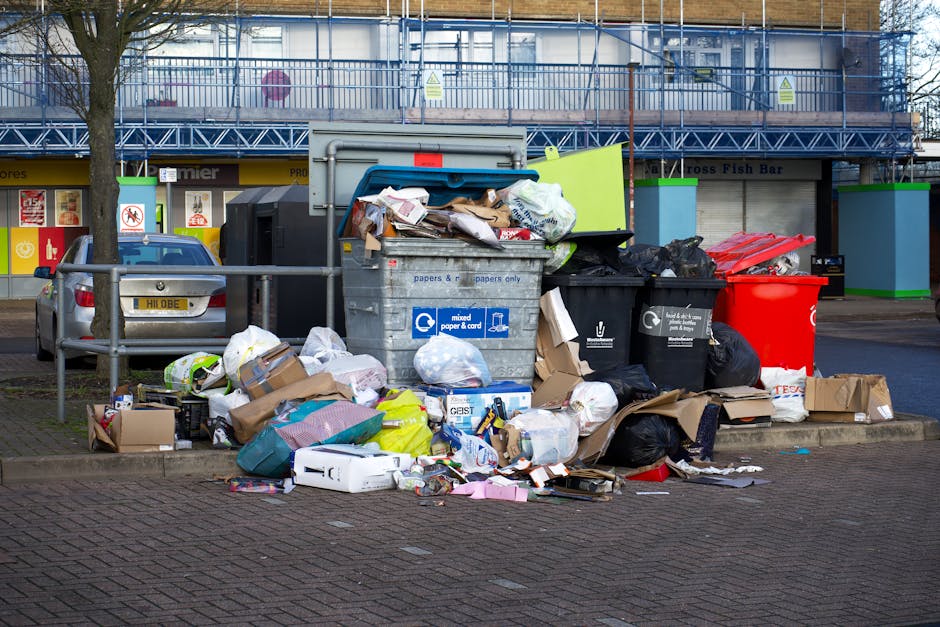
St Helier estate rubbish collection options: a practical guide for homeowners, landlords and local businesses
If you are trying to sort out St Helier estate rubbish collection options, you are probably dealing with a very ordinary but deeply annoying problem: waste that has built up faster than you expected, in a flat, a house, a communal area, or a business space that simply cannot be left to pile up. Maybe it is a one-off clear-out after a move. Maybe the garage has become a time capsule. Or maybe a tenant has moved out and left more behind than anyone wanted to see on a Monday morning. Whatever the case, the right collection option makes the job easier, cleaner, and far less stressful.
This guide breaks down the main ways rubbish collection works around St Helier estate settings, what to choose for different jobs, what to avoid, and how to make a sensible decision without wasting time or money. You will also find a comparison table, a practical checklist, and a few real-world pointers that tend to matter when the bins are full and the clock is ticking.
Why St Helier estate rubbish collection options Matters
Waste collection sounds straightforward until you are faced with a staircase full of broken furniture, a cupboard full of old packaging, or a garden corner that has quietly turned into a dumping ground. In estate settings, the consequences of poor rubbish handling are usually felt faster than in more isolated properties. Shared access routes, limited parking, communal bins, and neighbours living very close by can turn a small rubbish issue into a nuisance almost overnight.
That is why understanding your St Helier estate rubbish collection options matters. The right choice can reduce disruption, protect the property, and keep the area safer and tidier. It also helps you avoid the classic mistake of choosing the cheapest-looking option first and then discovering it cannot actually handle the volume, type, or timing of the waste you need removed.
There is also a practical side to this. A well-planned collection can save several trips, reduce manual lifting, and stop waste from sitting around long enough to attract smells, pests, or complaints. Let's face it, nobody wants to be the person trying to apologise for a black bag mountain outside a block of flats.
Expert summary: In estate environments, rubbish collection works best when the method matches the waste type, access conditions, and urgency. A quick fix is not always a smart fix, especially when shared spaces and neighbours are involved.
In our experience, the best outcomes usually come from people who pause for five minutes, look at what they actually need removed, and then choose the simplest service that safely fits the job. Not glamorous. Very effective.
How St Helier estate rubbish collection options Works
Most rubbish collection options for estate properties fall into a few broad categories. The key is understanding what each one is designed for and where it tends to work best. A small flat clear-out and a bulky garage clearance are very different jobs, even if both are described casually as "getting rid of junk".
1. Kerbside or scheduled bin collection
This is the everyday option for regular household waste. It works well for normal rubbish, food waste, recyclables, and other items accepted within standard collection rules. For estate properties, though, the limit is obvious: if the waste does not fit the bins, or it is too bulky, too heavy, or not accepted, this method stops being useful very quickly.
2. One-off rubbish removal
A one-off rubbish removal service is often the most practical route when you have a pile of mixed waste, bulky items, or a time-sensitive clear-out. This kind of service is useful for estate flats, maisonettes, and homes where access is awkward but the waste needs to disappear in one visit rather than over several weeks.
3. Bulky waste collection
Bulky waste collection is typically suitable for larger household items such as sofas, wardrobes, mattresses, and broken appliances. It can be a good fit when you only have a small number of items, but it is less flexible if the job grows beyond the original list.
4. Property or clearance-based removal
For larger jobs, property clearance services may be the better fit. These are usually used for lofts, garages, houses, flats, offices, or full estate clearances where the goal is to remove a substantial amount of material in a structured way. If you are clearing a rented flat or getting a property ready for sale, this approach can be a relief, frankly.
You can explore related service types such as flat clearance, house clearance, home clearance, and waste removal if you need a more tailored solution.
5. Item-specific collection and disposal
Sometimes the job is more specific. Maybe it is just furniture, garden waste, or an overfull loft that has never quite been tackled. In those cases, a focused service may be more efficient than a general rubbish collection. It is a bit like choosing the right size spanner instead of hitting the bolt with a hammer. Tempting, but no.
Key Benefits and Practical Advantages
The main benefit of choosing the right collection option is simple: the job gets done properly the first time. But there are several other practical advantages worth considering.
- Less disruption: A well-matched service can reduce noise, lifting, and time spent around shared entrances or parking spaces.
- Better use of space: Clearing waste quickly opens up garages, lofts, hallways, and communal corners.
- Cleaner presentation: This matters if you are a landlord, seller, managing agent, or business owner.
- Safer moving conditions: Fewer trip hazards, fewer blocked routes, fewer awkward carry-outs through tight stairwells.
- More predictable planning: When you know what service you need, you can estimate timing and effort more sensibly.
- Potential recycling value: Some items can be separated for recycling or reuse rather than treated as general rubbish.
For estate residents especially, the real advantage is peace of mind. You are not staring at bags in the hallway, wondering when the situation became a small logistical drama. You sort it once, and move on with your day.
If sustainability matters to you, it is worth looking at services that understand sorting and responsible disposal. You can also review recycling and sustainability if reducing landfill use is part of your decision-making.
Who This Is For and When It Makes Sense
St Helier estate rubbish collection options are relevant to a wide mix of people. The common thread is not your property title; it is the type of waste and the practical difficulty of shifting it.
Homeowners and tenants
If you live in a flat, maisonette, or house on or near an estate and you have more waste than the standard bins can cope with, a dedicated collection can save a lot of hassle. This is particularly useful after decluttering, redecorating, or replacing bulky furniture.
Landlords and letting agents
Void periods and end-of-tenancy situations can leave surprising amounts of rubbish behind. A quick, clear-out style collection helps turn the property around more efficiently. It is not unusual to find a few bags. It is also not unusual to find a fridge, a broken bed frame, and three chairs that nobody claims.
Estate managers and caretakers
For communal rubbish issues, especially in shared areas, the need is often more about speed and containment than perfection. Regular collections, ad hoc clearances, and targeted removal of bulky items can all play a role.
Small businesses and local offices
Businesses on or near residential estates may need disposal for furniture, archives, packaging, or renovation waste. In those cases, a service that can handle mixed loads is often more efficient than trying to break everything down into separate trips.
Anyone facing a one-off problem
If you are dealing with an urgent clear-up, a deep clean, or a property that needs to be handed over quickly, this is exactly the sort of situation where a good collection option earns its keep. Sometimes the answer is not "more bins". It is "the right truck, the right crew, and one calm removal slot".
Step-by-Step Guidance
If you want to choose the best St Helier estate rubbish collection option without overthinking it, use a simple process. It usually takes less time than people expect.
- List everything that needs removing. Walk through the space and separate general rubbish, bulky items, recyclable materials, and anything that may need special handling.
- Check access carefully. Look at stairs, lifts, parking, narrow hallways, and where loading can happen safely. A quick look at the route can save a headache later.
- Estimate volume, not just item count. Ten bin bags and one sofa are not the same job. Volume matters more than people think.
- Decide how fast it needs to happen. If the waste must be gone today or tomorrow, you will probably need a more flexible option than a routine collection.
- Think about special items. Appliances, mattresses, garden waste, and mixed clearance waste may need different handling or sorting.
- Compare services by suitability, not just price. The cheapest quote is not always the best value if it creates delays or extra visits.
- Prepare the space before collection. Keep the route clear, group items together, and make sure anything staying on site is clearly separated.
- Ask how the waste will be handled. Reuse, recycling, and responsible disposal are all worth understanding before the job starts.
If you are working around furniture or mixed household waste, you may find dedicated services such as furniture disposal, furniture clearance, or garage clearance more appropriate than a general rubbish-only arrangement.
Small note from experience: if the waste is tucked behind boxes in a loft or stacked in a garage, take a minute to check what is really there before booking. That "just a few bits" feeling can age badly.
Expert Tips for Better Results
People often focus on removal day, but the smoother jobs are usually won before the team arrives. A few simple habits make a noticeable difference.
- Separate the obvious categories first. Keep reusable items, rubbish, and recycling apart where possible. It speeds everything up.
- Put the heaviest items nearest the exit. That sounds basic, but it saves time and awkward lifting.
- Keep clear photos before booking. Not only does this help with quoting, it also makes communication easier if the access is tight.
- Be honest about the volume. A slightly bigger job than expected is manageable. An under-described job can create friction.
- Use labels for mixed loads. If there are items that must be kept, mark them clearly so nothing important goes by mistake.
- Plan around neighbours and quiet hours. In estate settings, a little courtesy goes a long way.
- Consider internal clearances before external disposal. If the clutter is coming from an attic, a shed, or a storage room, clearing the source area first can prevent the mess being reintroduced later.
If the job includes loft storage or seasonal items that have built up over time, a service like loft clearance can be more effective than treating it as ordinary rubbish. Likewise, garden clutter is often better dealt with through garden clearance rather than a generic load.
A small bit of planning often does more than people expect. The difference between a stressful clearance and a straightforward one can be a single phone call, a couple of photos, and a sensible sort-out beforehand. Not bad for ten minutes' work.
Common Mistakes to Avoid
Estate rubbish collection goes wrong in fairly predictable ways. Avoiding these mistakes saves time, money, and the sort of frustration that leaves everyone speaking a bit too sharply.
1. Underestimating the amount of waste
People often count items instead of volume. A small stack of dismantled furniture can take up far more space than expected. If in doubt, assume it is more than it looks.
2. Ignoring access problems
Shared stairways, lift restrictions, and parking limitations can all affect how the collection is done. If access is difficult, mention it early. It is far easier than finding out during arrival.
3. Mixing restricted items with general rubbish
Some loads need special handling or cannot be treated like everyday waste. If you are unsure, ask before placing items together.
4. Waiting too long
Waste sitting around for days or weeks becomes more disruptive and often more unpleasant to handle. If the area is already tight, delay usually makes everything feel worse.
5. Choosing on price alone
Cheap can be fine. Cheap and unsuitable is another matter entirely. The real value is in the service matching the job.
6. Forgetting communal impact
In estate settings, one person's postponed clearance can become a corridor issue or a shared-bin problem. That has a way of irritating everyone, understandably.
Tools, Resources and Recommendations
You do not need a complicated toolkit to handle rubbish collection well, but a few practical resources make the process smoother.
- Camera phone: Useful for photographing the load, access points, and any awkward items before you book.
- Basic gloves and sturdy footwear: Handy if you are sorting items before a collection day.
- Marker pen and tape: Good for labelling items to keep, particularly in busy household or office spaces.
- Bag supply: Strong rubble sacks or refuse bags help with smaller loose waste.
- Measuring tape: Helpful if you need to check whether bulky items will fit through hallways or doorways.
- Simple room-by-room list: Often more useful than trying to remember everything from memory.
For more specialised jobs, you may want to look at builders waste clearance for renovation debris or office clearance if the waste comes from a workplace rather than a home. Different waste streams really do behave differently, and treating them all the same is how projects drift.
If you are comparing providers, also check the practical details in pricing and quotes, and review the company's approach to insurance and safety. That is not over-cautious. It is just sensible.
Law, Compliance, Standards, or Best Practice
Waste handling in the UK is not something to be casual about. Even when a job looks small, there are still basic duties around safe handling, suitable transport, and responsible disposal. You do not need to become a legal expert to book a rubbish collection, but you should expect the work to be carried out in a way that protects people and property.
For estate settings, best practice usually means:
- Keeping pathways clear: Shared access areas should not be blocked longer than necessary.
- Using safe lifting methods: Heavy or awkward items should be moved by people who know how to handle them properly.
- Separating unsuitable items: Some materials need different handling from ordinary household waste.
- Protecting surfaces and communal areas: Door frames, stair edges, and floors can be damaged if removal is rushed.
- Using responsible disposal routes: Recycling and reuse should be considered where appropriate.
It is also sensible to confirm that the provider follows internal safety procedures and can explain how they approach waste segregation, transport, and disposal. If you want a broader sense of business standards and policy approach, pages like health and safety policy and terms and conditions can give useful context.
For business users, the rules and expectations may feel a bit more formal, especially where commercial waste is concerned. That is normal. The key is not to guess. Ask questions, keep records where needed, and choose a service that takes compliance seriously without making the process feel fussy.
Options, Methods, or Comparison Table
Here is a simple comparison to help you choose between the most common St Helier estate rubbish collection options. The best fit depends on the waste type, volume, access, and urgency.
| Option | Best for | Strengths | Limitations |
|---|---|---|---|
| Regular bin collection | Routine household waste | Simple, familiar, built into daily life | Not suitable for bulky or excess waste |
| Bulky item collection | Sofas, beds, wardrobes, appliances | Good for a few large items | Less flexible for mixed or high-volume loads |
| One-off rubbish removal | Mixed waste and urgent clear-outs | Fast, adaptable, practical for estate access issues | May cost more than routine disposal, depending on load |
| Flat or house clearance | Whole rooms or full properties | Best for larger clear-outs and move-outs | Requires clearer planning and accurate description |
| Furniture or specialist item removal | Specific bulky contents | Efficient for targeted jobs | Only useful if your waste matches the service type |
If you are looking at a single room, shared flat, or a property that needs tidying before new occupants arrive, then a focused option may be ideal. For larger or more mixed jobs, full-service clearance often works better. Truth be told, the "right" answer is usually the one that stops you having to do the work twice.
Case Study or Real-World Example
Imagine a second-floor flat on an estate in St Helier where the tenant has moved out. The hallway contains two old armchairs, a mattress, several black bags, a disassembled desk, and a box of random household bits that nobody wants to go through one item at a time. The landlord needs the place ready for viewings within a short window, and the lift is out of action for part of the day.
In that situation, a standard bin approach is not enough. A bulky collection may remove some of the items, but the mixed nature of the waste makes a more flexible clearance the better choice. A team that can deal with mixed household waste, carry items down stairs, and sort materials for disposal is likely to save time and reduce disruption.
The same job handled badly might mean several failed attempts, bags left in communal space, and a frustrated call from a neighbour wondering why there is a mattress in the corridor. Nobody enjoys that phone call. Nobody.
The better approach is usually: photos first, access details upfront, waste grouped by type, and the right service booked for the real scale of the job. Small details, but they matter. A lot.
Practical Checklist
Use this quick checklist before arranging collection:
- List every item or waste type that needs removing.
- Check whether any items are bulky, heavy, or awkward to carry.
- Confirm access routes, parking, and lift availability.
- Separate items you want to keep from items to be removed.
- Take a few clear photos of the load if you can.
- Decide how urgently the work needs to be completed.
- Think about whether recycling or reuse is possible for part of the load.
- Confirm whether the service suits flats, houses, garages, lofts, or offices.
- Ask about safety, disposal, and what happens to mixed waste.
- Make sure the collection time works for neighbours and building rules.
For jobs involving storage spaces or mixed household contents, services such as furniture clearance, garage clearance, and loft clearance can be a more precise fit than a general collection. And for larger property-wide situations, home clearance or house clearance may make more sense.
Conclusion
Choosing between St Helier estate rubbish collection options is mostly about matching the service to the real job in front of you. If the waste is routine, standard collection may be enough. If it is bulky, mixed, awkward to access, or time-sensitive, a more flexible clearance option will usually be worth it. The best results come from a bit of planning, honest volume estimates, and a provider that understands estate access and shared-space realities.
Keep it simple where you can. Be thorough where it matters. And if the clutter has been sitting there long enough to make you sigh every time you walk past it, that is usually a good sign it is time to sort it properly.
Get a free quote today and see how much you can save.
Sometimes the relief is not just in the cleared space, but in how much lighter the whole place feels afterward. That matters more than people think.
Frequently Asked Questions
What are the main St Helier estate rubbish collection options?
The main options usually include regular bin collection, bulky waste collection, one-off rubbish removal, and more complete property clearances such as flat, house, or home clearance. The right choice depends on volume, access, and how quickly the waste needs to go.
Which option is best for bulky furniture in a flat?
If you only have one or two items, a bulky collection may be enough. If the flat contains a mix of furniture, bags, and extra clutter, a broader flat clearance is often more practical and less stressful.
Can I use regular bin collection for all types of waste?
No. Routine bin collection is designed for standard household waste and accepted recycling. Bulky items, renovation debris, and larger clear-outs usually need a different approach.
How do I know whether I need rubbish removal or a full clearance?
Think about scale. If it is a small pile or a few items, rubbish removal may be fine. If you are dealing with several rooms, a loft, a garage, or an entire property, a clearance service is usually the better fit.
Is estate waste collection suitable for landlords?
Yes. Landlords often need rubbish collection after tenants move out, especially when properties contain left-behind furniture, household waste, or mixed clutter. It helps get the property ready faster.
What should I do before booking a collection?
Make a list of what needs removing, take photos, check access, and separate anything you want to keep. If there are stairs, lifts, or parking restrictions, mention them early.
Can rubbish collection include garden or loft items?
Yes, but it is often better to use a service matched to the space. Garden waste and loft contents can be handled through more specific clearances, which usually makes the process more efficient.
How do I avoid problems with shared areas on an estate?
Keep walkways clear, choose a collection time that causes minimal disruption, and make sure waste is organised before the team arrives. In estate settings, courtesy matters nearly as much as speed.
What happens to recyclable items?
That depends on the service and the type of material. Many providers separate recyclable items where possible, but the exact handling can vary based on the load and disposal route.
Do I need to worry about safety or insurance?
Yes, especially if items are heavy, awkward, or must be moved through shared spaces. It is sensible to choose a provider that can explain its safety approach and insurance arrangements clearly.
How quickly can estate rubbish usually be collected?
Timing depends on the provider, the size of the job, and access. Some one-off clearances can be arranged quickly, while larger or more complex jobs may need a bit more planning.
What is the most common mistake people make?
The biggest mistake is underestimating the load and choosing the wrong service type. A job that starts as "just a few bits" can become a much bigger task once it is properly looked at.